What are you looking for?

Training Course “Dealing with Climate-related Loss and Damage within Climate Risk Management”

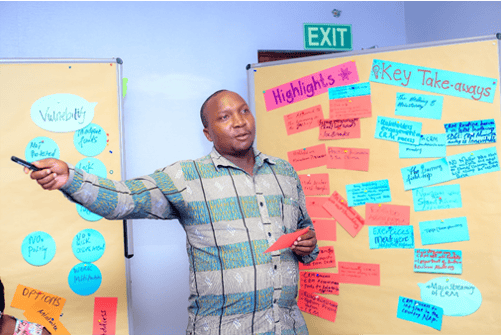
A man stands in front of two pinboards and explains something.
© GIZ / GP Loss & Damage

The training course “Dealing with Climate-related Loss and Damage within Climate Risk Management” developed by the Global Programme on Risk Assessment and Management for Adaptation to Climate Change (Loss and Damage) provides explanations about conceptsapproaches and measures to avert, minimize, and address losses and damages. 
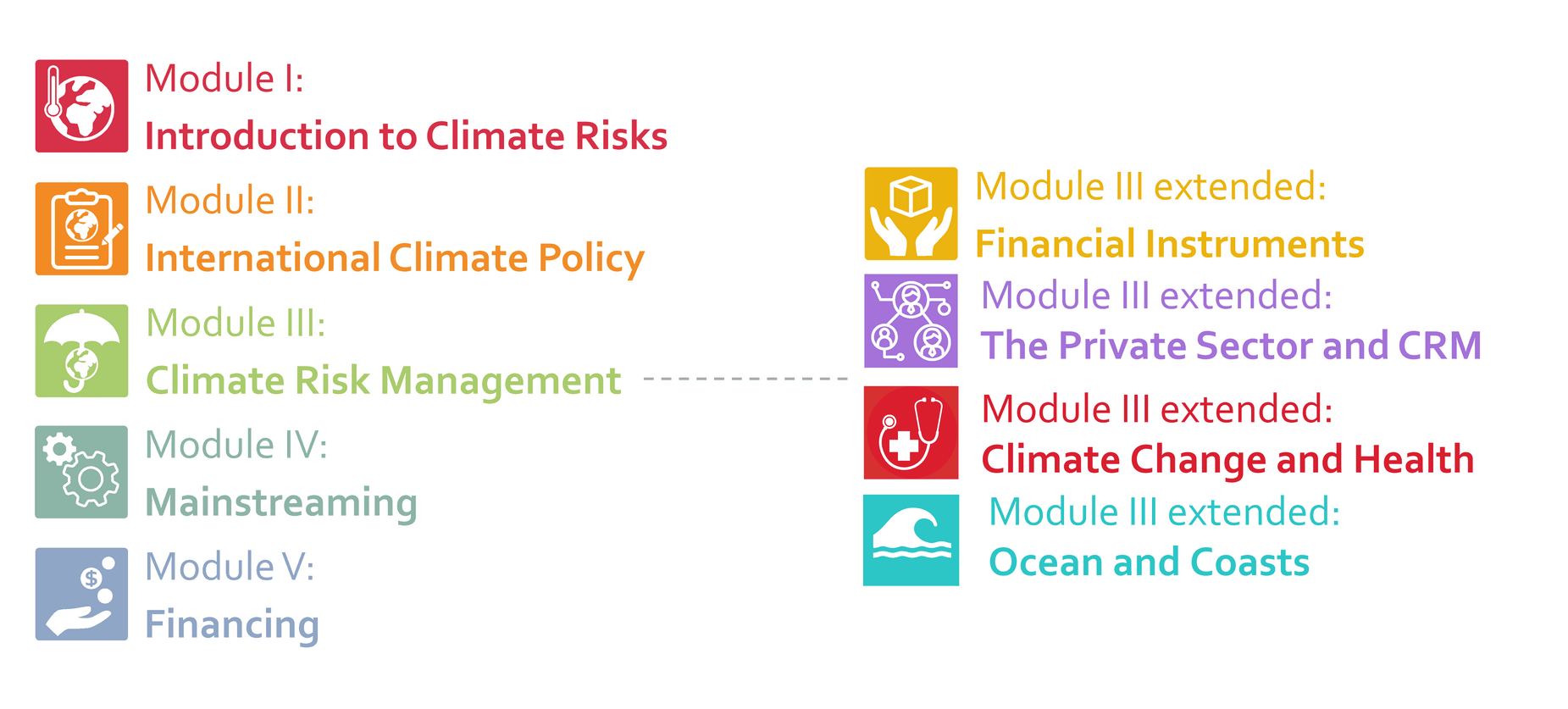
The training serves as a tool to build technical capacities and initiate dialogue among partners working in various communities (climate, disaster, development etc.) and sectors. It targets technical staff of institutions and decision-makers in partner countries. The modules of the course are structured as follows:  
Self-paced e-learning course

Selected contents from the training are now available in the self-paced learning course “Climate Risk Management – An Introduction” on the e-learning platform atingi. This online self-learning course introduces you to 1) the basic concepts of climate risks, 2) international climate policy, 3) GIZ’s CRM framework as well as 4) an applied module to CRM in ocean and coasts. After successfull attending the course, you can download a course certificate.

Implementation

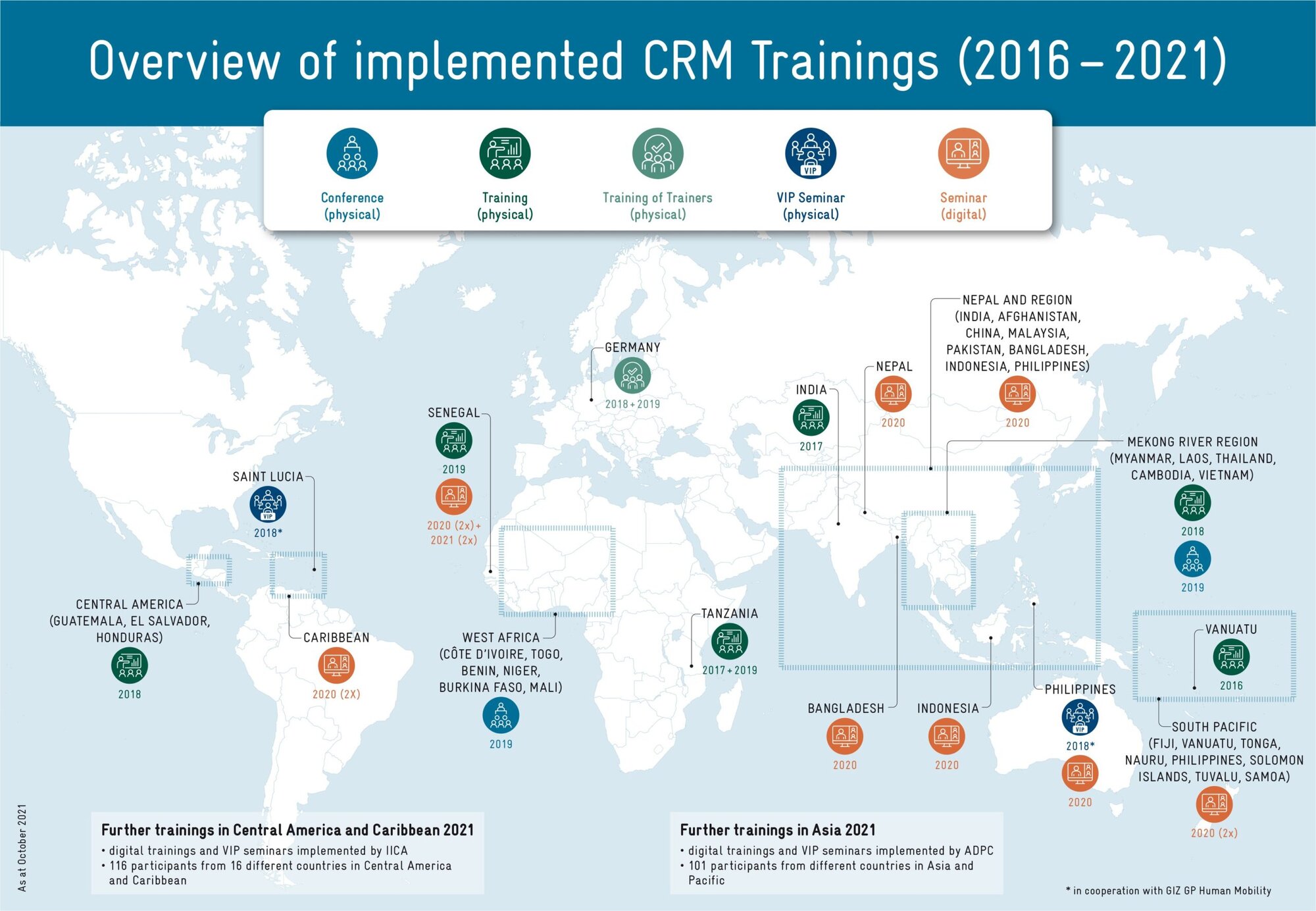
Until 2021, 13 face-to-face and 13 virtual seminars have been implemented. Among them two “Trainings of Trainers” to establish a pool of certified international trainers who can pass on the training’s contents and ensure the long-term implementation. Up till now, over 500 participants have been reached in various countries and regions of Central America, the Caribbean, Africa, and Asia since 2016. The map below shows an overview of the implemented CRM trainings and the different formats in which the training content has been delivered.

Click on the overview map to zoom in.
For further information please have a look at our training factsheet, available here.

For further information, please contact: SV_Klima_Beratung@giz.de
 

Recent Trainings

E-Learning sur la mobilité humaine dans le contexte des changements climatiques

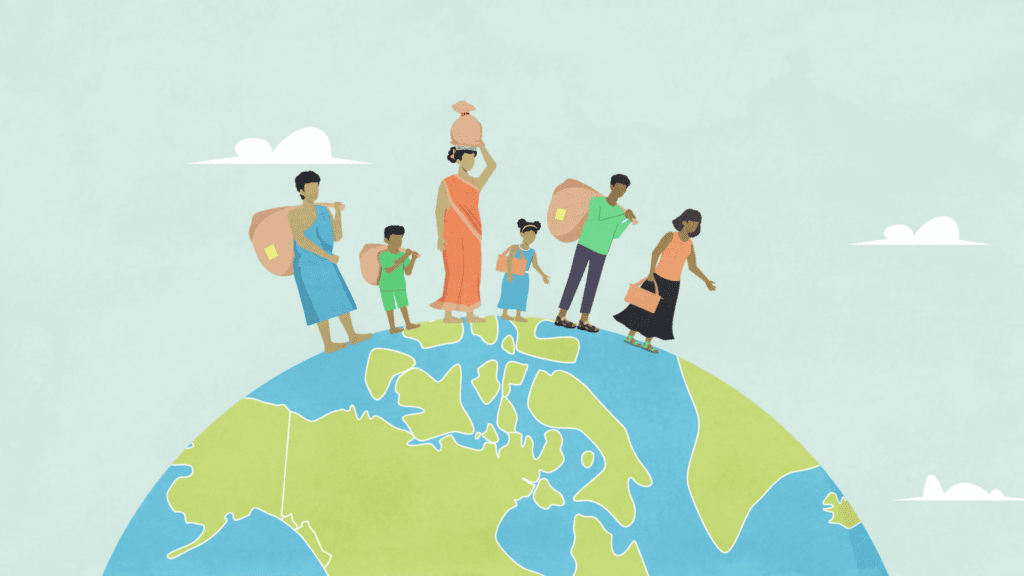
Dans ce cours interactif à l’auto-rythme, qui a été développé en coopération entre le Programme mondial « Mobilité humaine dans le contexte des changements climatiques » de la GIZ et l’Université des Nations Unies – Institut pour l’Environnement et la Sécurité Humaine (UNU-EHS), les décideurs politiques, les professionnels du développement, les chercheurs et les étudiants apprendront comment les changements climatiques influencent la mobilité humaine. En introduisant des concepts clés tels que la migration liée au climat, le déplacement en cas de catastrophe, la relocalisation planifiée et les populations piégées, cette formation développera les capacités nécessaires pour envisager la mobilité humaine liée aux changements climatiques (MHCCC) dans votre domaine de travail respectif. La formation présente des exemples variés de différents pays sur le phénomène du MHCCC ainsi que des options pour les gérer.

Read More »

Transforming our Disaster Risk Lens: From response to prevention

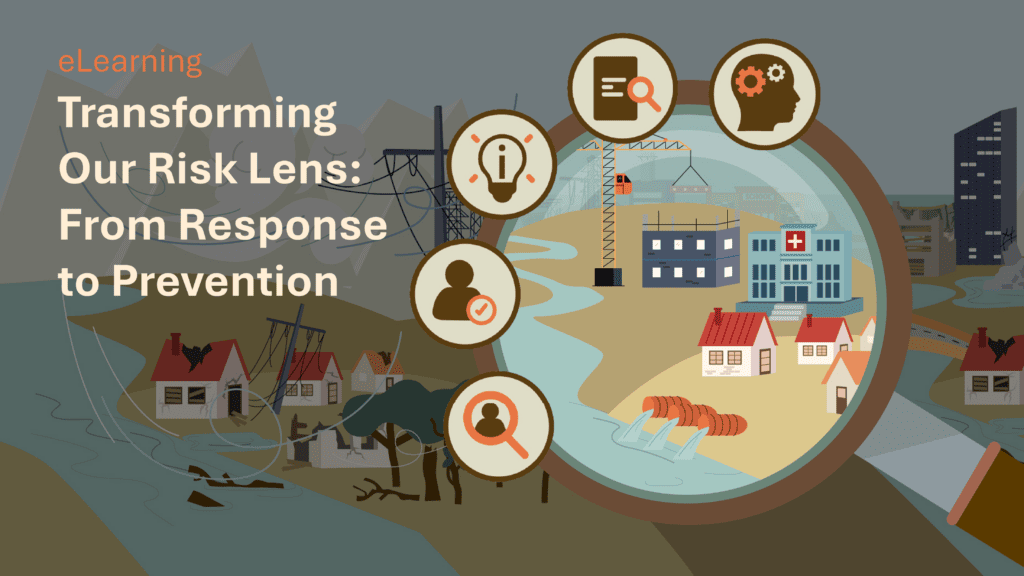
Disasters are becoming more frequent, more intense, and increasingly interconnected. Building resilience requires collaboration across governments, communities, civil society, and the private sector. This course introduces the foundations of disaster risk management (DRM) and explores how risk considerations can be systematically integrated into development planning and decision-making.

Read More »
A comic-style illustration featuring the words ‘Knowledge for all’, showing an African woman called Amina holding a tablet.

Building Resilient African Cities: Join Amina’s Journey Through Risk-Informed Urban Development (RIUD)

In this interactive, story-driven course, learners accompany Amina, an urban development specialist, on a mission across Africa. She explores how communities, local governments, and practitioners are addressing urban risks and building resilience in diverse contexts. The course provides practical knowledge and tools to help urban planners, policymakers, and development practitioners integrate climate risk considerations into urban development processes, contributing to safer, more resilient, and sustainable cities across Africa.

Read More »